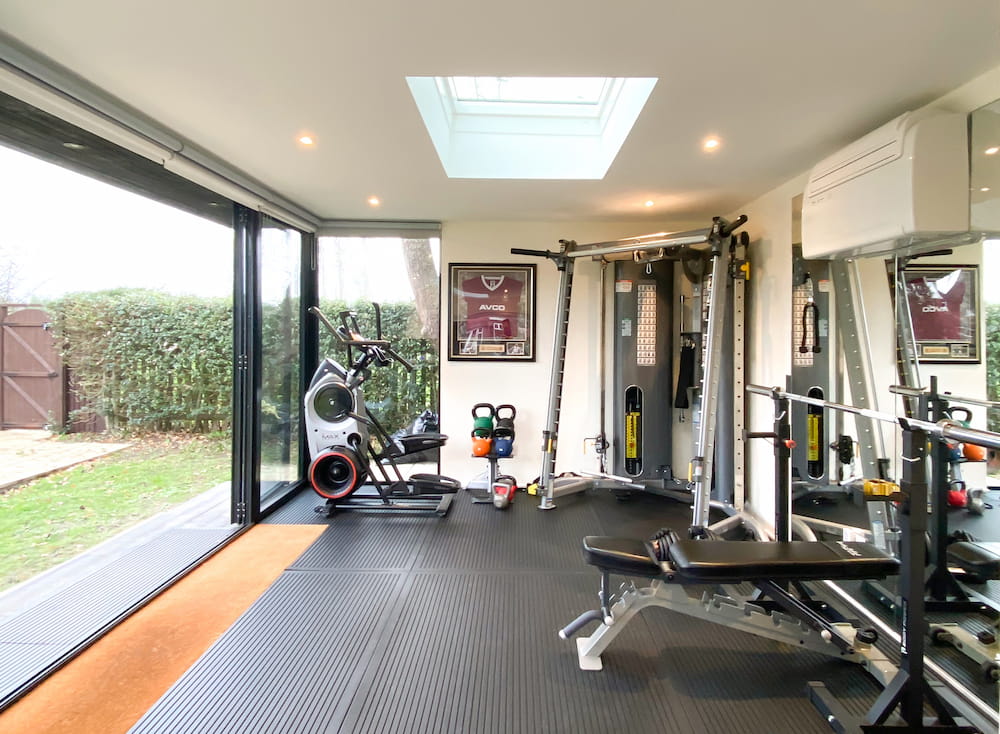
Building your own gym is one of the best ways to help reach your fitness goals without needing to leave your home. Going to the gym can be stressful, time-consuming, and exhausting – let alone inconvenient when you can’t use the right equipment.
If you’ve got a little extra space or an empty garage, you’re in luck. Here’s how and why you should transform that zone into a fresh, modern, and completely private home gym for your use exclusively.
Why Build a Gym at Home?
Physical exercise promises a range of benefits, including better sleep, increased energy, and reduced levels of stress and anxiety. Whether you’re an experienced powerlifter or you just started a new fitness routine, building your own gym brings these benefits closer.
Firstly, it takes away the extra time you’d need to lend to a longer commute or drive to your nearest public gym. Secondly, a private gym allows you to feel more comfortable and work out confidently in your own space.
What’s more, waiting for equipment to be free to use will become a distant memory. With your own gym, you can choose and buy the equipment and machines that align with your goals, meaning you’ll never have to waste any time standing around.
How to Build a Home Gym: Our Three Top Tips
1- Set a budget
Before starting any project, it’s important to work to a budget. When it comes to building a home gym, knowing how much you’re willing to spend will help you to set realistic expectations too.
During the planning stages, make sure you work out how much money you can set aside each month for your new gym. While not paying for a monthly gym contract will save you money overall, it’s crucial not to overspend when you’re first setting up a private gym.
Regardless of your requirements and vision for a new gym, it’s always important to keep an eye on your money and build your credit score before committing to any finance for equipment.
2- Choose the space
Next, you’ll need to work out just where you’d like to set up your new gym. Working out can be distracting and noisy, so remember to think about your neighbors and the ways in which your new gym could potentially disturb them.
Whether you choose to convert a shed, garage or outbuilding, or an existing room in your home, you’ll need to think carefully. Try to install soundproofing if you’re going to be working outside, but always make sure to leave enough physical space for your activities.
3- Buy your equipment
If you’re a novice, it’s always better to start small with the equipment you know how to use. If you dive in at the deep end with complicated machines, you could risk injuries from improper use. Don’t forget that to perform well in any sport, you need a strong core – so it’s always worth starting with mats to master the essential core exercises before you train with weights.
Additionally, professional gym equipment can be difficult to set up correctly, so it’s only worth choosing specialist kit if you’re already experienced.
Concluding thoughts…
No matter how strong you are, always remember to lift with good posture when you’re setting up or training in your home gym. If you’re unsure on how to use your equipment, don’t be afraid to ask a friend or neighbor for advice.
Read Also
- Levels of Mental Health Care and When to Seek Support
 Mental health care can range from occasional outpatient appointments to 24-hour hospital treatment. The appropriate level depends on safety, symptom severity, daily functioning, medical needs, available support, treatment history and personal preferences. A licensed clinician should assess these factors rather than relying on a symptom list alone. Need help now? In the United States, call… Read more: Levels of Mental Health Care and When to Seek Support
 - How to Choose a Shilajit Brand Based on the ResearchIn a randomized trial published in the Journal of the International Society of Sports Nutrition in 2019, 63 active men took 250 mg of standardized shilajit, 500 mg, or a placebo every day for eight weeks, and the benefit for strength retention after a fatiguing workout appeared only at 500 mg. For anyone choosing a… Read more: How to Choose a Shilajit Brand Based on the Research
- How to Incorporate Relaxation into Your Busy ScheduleFinding balance when you have a packed daily agenda often feels out of reach. Between work duties, family obligations, and personal projects, personal rest usually gets pushed to the bottom of the list. Small, intentional shifts in daily habits can help restore calm without requiring hours of extra free time. Continue reading to discover everything… Read more: How to Incorporate Relaxation into Your Busy Schedule
- Red Light Therapy for Skin and Wellness: Meet Vital Red Light TherapyModern wellness is not always about complicated treatments or long routines. Many people are now looking for simple, convenient ways to support their skin, recovery, and overall wellness at home. One technology getting more attention is red light therapy. Red light therapy uses specific wavelengths of red and near-infrared light to support the body’s natural… Read more: Red Light Therapy for Skin and Wellness: Meet Vital Red Light Therapy
- Managing Shock Loss After a Hair Transplant: The Financial and Clinical Imperative of Post-Op CareIn the rapidly evolving landscape of private healthcare, executive leadership within cosmetic and restorative surgery clinics faces a dual challenge: maintaining strict clinical standards while maximizing patient lifetime value (LTV) and brand advocacy. As the global medical tourism and elective procedure markets expand, clinical outcome quality alone is no longer the sole differentiator for premium… Read more: Managing Shock Loss After a Hair Transplant: The Financial and Clinical Imperative of Post-Op Care
- Transform Your Skin Health: Premier Gluta IV Therapy in DubaiThis comprehensive guide explores how modern intravenous wellness treatments can help revitalize your complexion, boost immune function, and support overall cellular health. By incorporating modern IV therapy Dubai services into a routine health regimen, individuals can achieve direct nutrient absorption for optimal results. Selecting a customized gluta IV drip Dubai treatment provides targeted antioxidant defense,… Read more: Transform Your Skin Health: Premier Gluta IV Therapy in Dubai